
Speak Arabic Confidently: A Guide for Non-Arabic Speakers
"Practical Tips and Proven Strategies to Help Non-Native Speakers Master Arabic with Confidence"

If you want to learn Arabic but feel scared, don't worry. This guide is here to help you start or improve your Arabic skills. You'll find ways to speak Arabic with confidence.

Learning Arabic as a non-native speaker is rewarding. It opens up cultural exploration and boosts your career and personal life. In this article, you'll learn how to learn arabic for non arabic speakers. You'll start your learn arabic online journey!
Unleash Your Arabic Language Potential
Start an exciting journey to explore Arabic's richness and complexity. Learning Arabic might seem daunting, but it's achievable with the right mindset. Understanding Arabic's unique features will boost your language skills and cultural appreciation.
Arabic has a rich history, showing the vibrant societies of the Arab world. Learning about Arabic's origins and evolution can motivate you. The language's complex system will challenge you, but mastering it is rewarding.
Learning Arabic opens doors to communicate with colleagues, explore literature, or expand your cultural knowledge. Embrace Arabic's structure and nuances to unlock new possibilities. With dedication, you can learn arabic online and become proficient.
learning arabic for non arabic speakers: Overcome the Barriers
Starting to learn Arabic as a non-native speaker can be tough. You'll face challenges like mastering unique sounds, understanding the script, and dealing with complex grammar. But, with the right approach and effort, you can beat these hurdles and improve your Arabic skills.
One big challenge is getting used to Arabic's wide range of sounds. Sounds like the "h" and "q" can be hard to get right. To improve, practice often, use audio tools, and get feedback from native speakers.
Another hurdle is the Arabic script, which is different from what you might be used to. Learn the letters, their shapes, and how they change. Reading and writing regularly will help you get better at using the script.
Arabic's grammar, like its gender-based nouns and complex verb forms, can also be tricky. Keep practicing, use grammar resources, and talk in Arabic as much as you can. This will help you understand and use Arabic grammar better.
By tackling these challenges, you can become a confident Arabic speaker. Don't be afraid of the obstacles, stay committed, and check out 3 arabian online arabic grammar course to help you learn.
Immerse Yourself in Arabic Culture
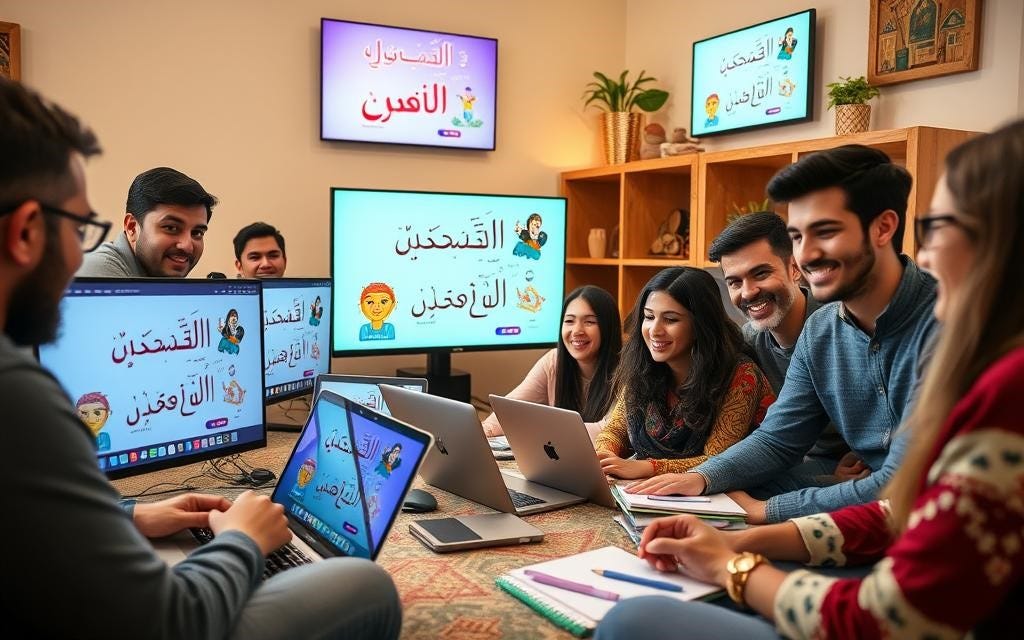
Learning Arabic online means diving into the rich culture of the Arabic-speaking world. You'll discover traditions, literature, music, and art that deepen your language skills. The 3 arabian online language course will boost your language abilities and personal growth.
The Arabic culture is full of vibrant colors, enchanting melodies, and timeless stories. Explore the enchanting poetry of Kahlil Gibran and Nizar Qabbani. Also, dive into Arabic music, with its haunting sounds and captivating rhythms.
Explore Arabic art, from calligraphy in mosques to mosaics in ancient palaces. Discover the vibrant colors and intricate patterns that have defined Arab art for generations.
Embracing Arabic culture will not only deepen your language skills but also foster a deep appreciation for its traditions. Learn Arabic online and start a journey that will enrich your mind and soul.
Mastering the Arabic Alphabet
Learning Arabic starts with the Arabic alphabet, or Abjad. It has unique letters and a special writing direction. At first, it might look hard, but with practice, you can get good at it.
The Arabic alphabet has 28 letters, each with its own look and sound. The script's curves and vowel placement make it a fun challenge. By learning the letters and their sounds, you'll build a strong base for reading, writing, and speaking.
It's not just about remembering letters. It's about understanding the language's structure and patterns. As you learn the script, you'll see the beauty and complexity of Arabic. This will prepare you for your future in learning Arabic.
Building a Strong Arabic Vocabulary
Expanding your Arabic vocabulary is key for effective communication if you're not an Arabic speaker. There are proven ways to learn and remember new words. This section will give you tools to build a strong vocabulary for different situations.
One good strategy is to connect new Arabic words with things you already know. This method, called mnemonic devices, makes words easier to remember. For example, link the word for "apple" with a picture of a juicy red apple. This way, you'll remember the word better.
Another great way is to practice speaking Arabic. Talk with native speakers, either in person or online, like 3 arabian online language course. Using the words you learn makes them stick in your mind. This method not only grows your vocabulary but also helps you understand the language better.
Building a strong Arabic vocabulary takes time and effort. But the benefits are huge. Learning key words and phrases opens up a world of cultural understanding and communication. Keep at it, and your Arabic learning journey will get more exciting with each new word.
Explore Engaging Learning Resources
As a non-Arabic speaker, you can unlock the secrets of the Arabic language. There are many engaging learning resources available. You can find immersive online courses and captivating audio lessons.
Interactive platforms are great for learning Arabic online. They use multimedia, games, and feedback to teach. You'll learn the Arabic alphabet, grammar, and cultural aspects.
For a hands-on approach, try 3 arabian online language courses. They offer live classes, interactive exercises, and practice with native speakers. This ensures a well-rounded learning experience.
It's important to explore and try different resources. Find the ones that work best for you. With various tools, you can learn faster, understand more, and speak Arabic with confidence.
Practice, Practice, Practice
Learning Arabic is a big challenge for those who don't speak it at home. But with regular practice, you can get better. Talking with native speakers, doing written exercises, and using Arabic in your daily life are key steps.
For those learning Arabic for non-Arabic speakers, the more you use the language, the faster you'll improve. Look for online Arabic learning options like interactive lessons and language apps. Try to use Arabic as much as you can in your daily life.
Practice doesn't have to be boring. You can enjoy it by listening to Arabic music, watching Arabic movies, or writing in Arabic. The more you use Arabic, the easier it will feel.
Keep practicing and stay positive, and you'll see your Arabic skills grow. Enjoy the learning process and let your love for Arabic guide you to becoming fluent.
Stay Motivated on Your Arabic Journey
Learning Arabic can be both rewarding and challenging for those who don't speak it. To succeed, staying motivated is crucial. Whether you're starting out or looking to improve, keeping a positive attitude and practicing regularly is essential.
Setting achievable goals is a great way to stay motivated. Break your goals into smaller, doable steps. For example, aim to learn a certain number of words or finish a grammar lesson each week. Celebrating your small wins can boost your motivation and keep you going.
Getting involved in Arabic culture can also help. Check out online courses like the 3 arabian online language course. It teaches the language and introduces you to Arab traditions and customs. Watching Arabic movies, listening to Arabic music, or talking to native speakers can also deepen your connection to the language and culture.
Remember, don't get discouraged by setbacks. Learning a new language is a journey with ups and downs. View challenges as chances to grow and learn. Stay patient and keep moving forward, knowing each step brings you closer to mastering Arabic.
Conclusion
In this guide, you've learned how to learn Arabic as a non-native speaker. You've discovered the language's unique traits and how to overcome challenges. By diving into the Arabic culture, you're getting closer to speaking Arabic fluently.
Learning Arabic online or through 3 Arabian online language courses is a great start. It gives you a strong base to keep learning. Keep practicing, stay positive, and explore Arabic's rich culture and language.
Keep going on your Arabic learning journey. Stay motivated, celebrate your wins, and enjoy the new doors opening. The road may have its bumps, but with hard work and determination, you'll open up a world of possibilities. You'll connect with people from all over the globe.
FAQ
What are the benefits of learning Arabic as a non-native speaker?
Learning Arabic opens doors to new opportunities. It lets you talk to many people and learn about Arabic culture. It also boosts your career in many fields. Mastering Arabic is rewarding and enriches your life.
How can I overcome the common challenges of learning Arabic?
Learning Arabic can be tough, especially for non-native speakers. But, with the right approach, you can overcome these challenges. Dive into Arabic culture, practice often, and use good learning tools. This will help you get better at Arabic.
What are the best resources for learning Arabic online?
There are many online tools to learn Arabic. You can find interactive platforms, virtual classes, apps, and video lessons. Try different resources to find what works best for you.
How can I stay motivated throughout my Arabic learning journey?
Staying motivated is crucial. Set goals, celebrate your wins, and be part of a learning community. Practice regularly, dive into Arabic culture, and make learning fun. This will keep you motivated.
What are the key differences between the Arabic alphabet and the Latin alphabet?
The Arabic alphabet, or Abjad, is very different from the Latin alphabet. It's written from right to left, has unique letters, and lacks uppercase and lowercase. It also has special vowel symbols. Knowing these differences is key to reading and writing Arabic well.
How can I build a strong Arabic vocabulary?
Building a strong vocabulary is vital for speaking Arabic well. Use memory tricks, talk with native speakers, and watch Arabic media. Keep learning new words by focusing on common ones used every day.
What are the benefits of immersing myself in Arabic culture?
Getting into Arabic culture makes learning the language better. It helps you understand traditions, literature, music, and art. This cultural dive makes your language skills stronger and enriches your life.